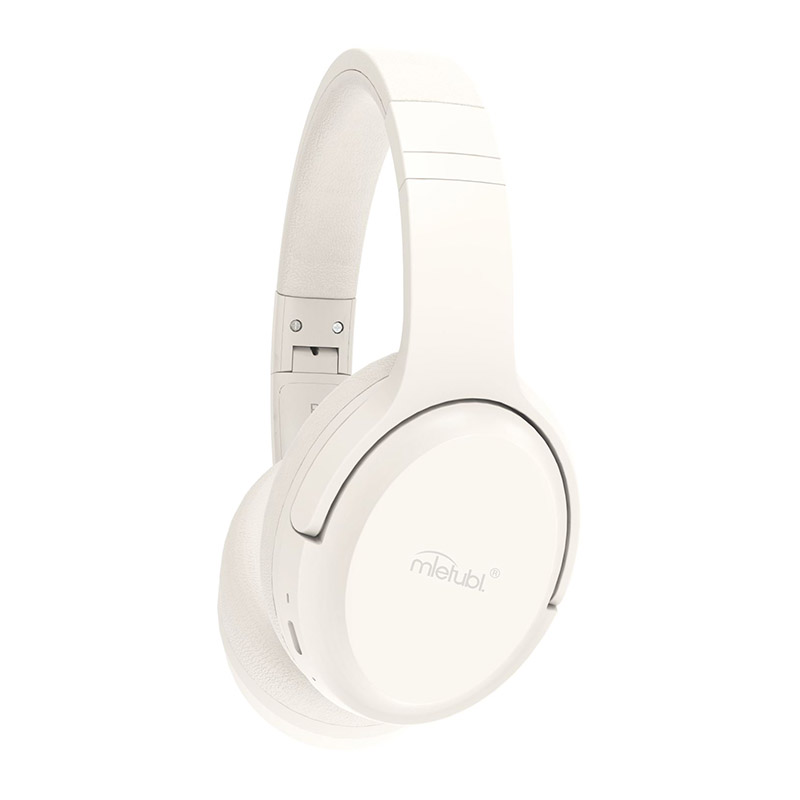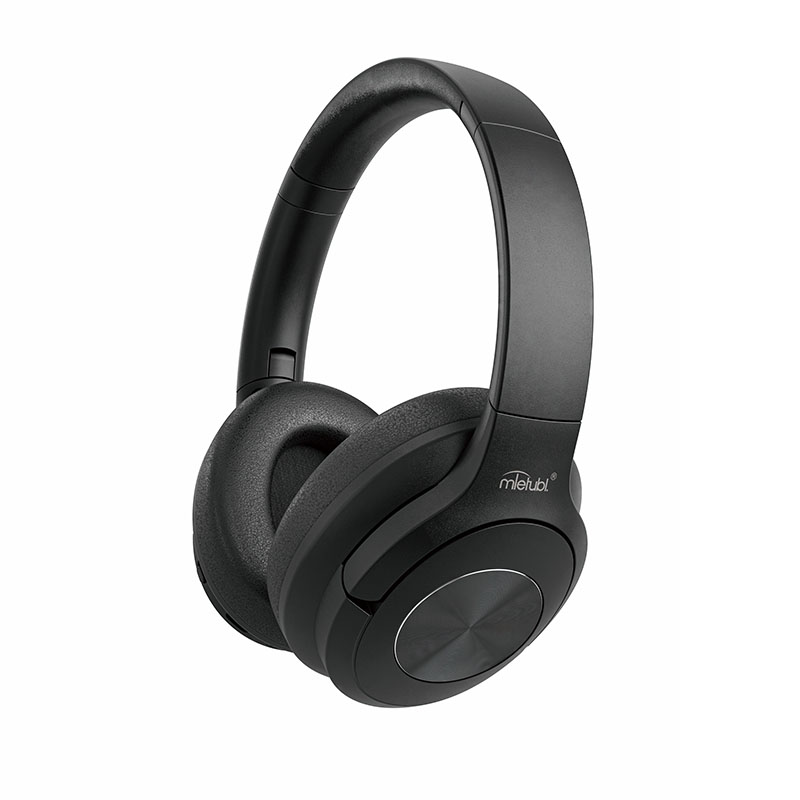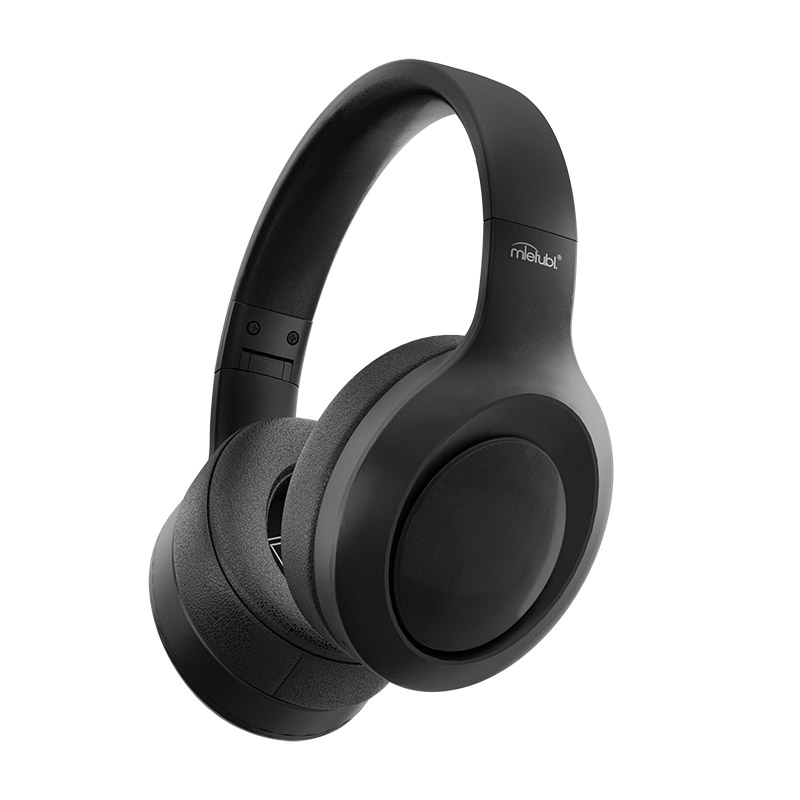
When dealing with annoying noise, besides using better-sealing earplugs or increasing headphone volume, are there other options? This brings us to the topic of ANC (Active Noise Cancellation) technology.
What is ANC technology
You may have never heard of ANC technology, but encounter it in daily life quite often. ANC technology is used in headphones, cars, and many household appliances. Users can noticeably feel the effect of noise cancellation, making ANC popular among younger people. In bustling city environments, wearing ANC headphones can create a personal sanctuary, offering freedom to listen to music, watch videos, or make calls without disruption.
Today, the market offers a wide variety of noise-canceling headphones, with brands like Sony, HiVi, and BOSE providing different ANC headphone models. In recent years, Chinese brands such as OPPO, Edifier, Huawei, and Xiaomi have also introduced highly effective ANC headphones, contributing to a vibrant market.
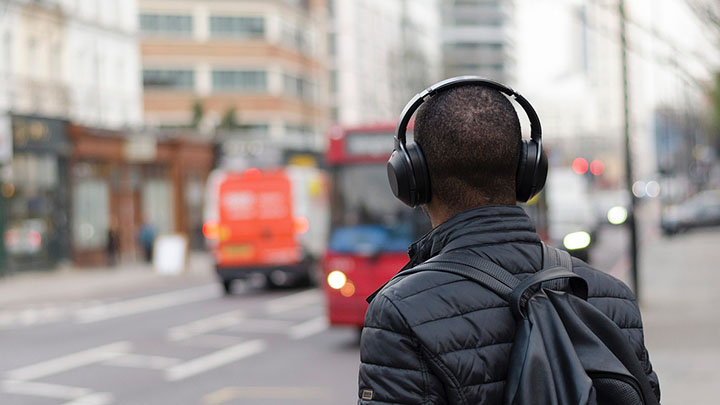
Using ANC headphones on a noisy road
How ANC Works
When sound waves travel through the air, they can interfere with one another. If two waves have the same frequency and amplitude but opposite phases, they can cancel each other out. This is the principle behind ANC.
ANC's core components are the ADC (Analog-to-Digital Converter), DSP (Digital Signal Processor), and DAC (Digital-to-Analog Converter). The ADC converts environmental sound into a digital signal, the DSP calculates and creates an opposite-phase signal, and the DAC converts this signal into sound waves that neutralize the noise.
In the past, limited DSP capabilities only allowed for analogue ANC, but as DSP chips have advanced, ANC technology has also improved. ANC is now divided into three main types: Feedforward, Feedback, and Hybrid ANC. Feedforward ANC uses a microphone outside the ear to detect noise, while hybrid ANC adds an extra microphone inside the ear to better capture residual noise, providing deeper noise cancellation.
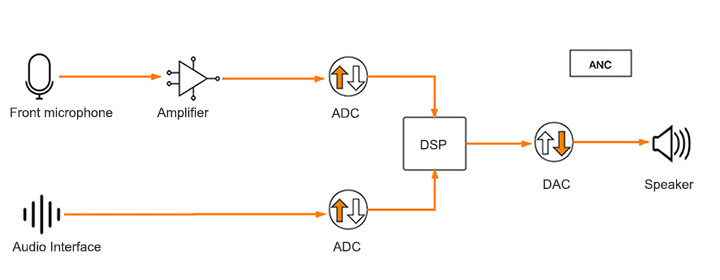
How ANC Active Noise Cancellation Works
ANC vs. Passive Noise Cancellation
Passive Noise Isolation involves physically blocking external noise through tight headband designs, acoustically optimized ear cups, or sound-absorbing materials. While effective at isolating high-frequency noise (such as voices), it’s less effective with low-frequency noise, such as in car or airplane. Passive noise isolation reduces noise without completely cancelling it, relying on physical structures to suppress sound.
The Future of ANC Technology
To meet growing demand, ANC components are becoming smaller and more energy-efficient, with IC manufacturers also working on advancements for future tech. Smart ANC is a major focus, where optimized models and algorithms allow automatic, adaptive noise cancellation suited to various environments, reducing energy consumption and enhancing efficiency. As storage technology evolves, ANC’s capabilities are expected to expand into more intelligent applications across different fields.